 REVIEWS.io - Rate us to Win Seeds
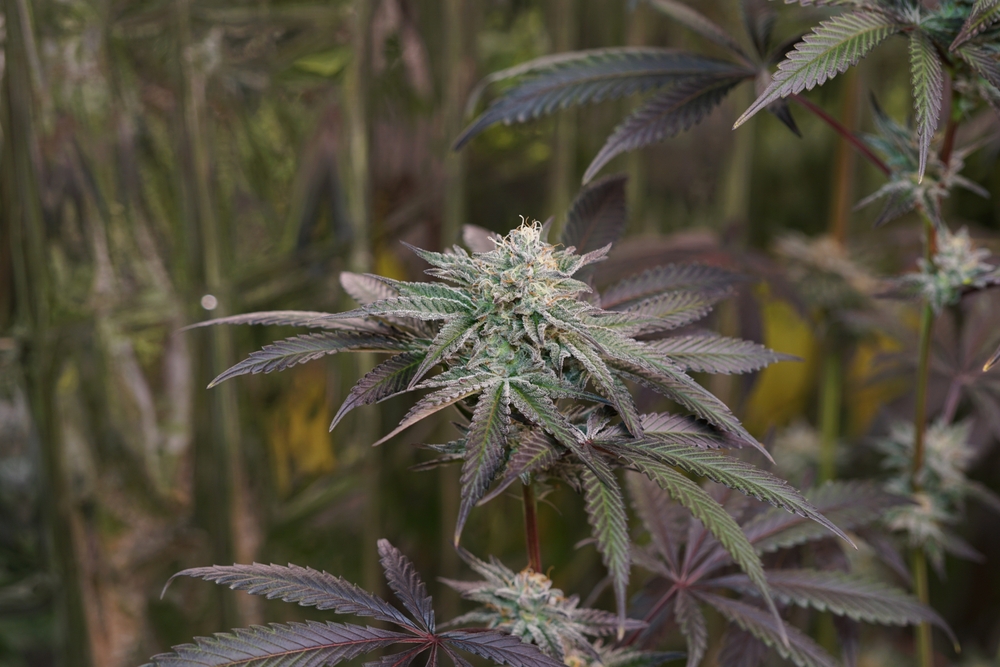
Understanding different cannabis strain types is essential for consumers and growers, since it influences potency, cultivation methods, market demands, and effects. While consumers can identify the best strains as per their therapeutic needs and preferences, growers can benefit from the knowledge regarding strain genetics, useful to optimise climate suitability, yield, and cannabinoid profiles. Apart from these, awareness regarding terpene and cannabinoid profiles enhances informed and safe consumption. Overall, prior knowledge regarding strains empowers better cultivation practices, an effective and sustainable cannabis industry, and personalised use. Here, we talk about the differences between landrace strains and modern hybrid strains of cannabis.
What Are Landrace Strains?
Landrace strains are naturally occurring original varieties of cannabis, adapted to particular geographic regions over centuries. Being influenced by local climates, cultivation practices, and soils, these strains show unique genetic profiles and act as the major foundation of modern hybrids.
These originate in several areas like Thailand, the Hindu Kush mountains, South Africa, and Jamaica, and hold the unaltered, pure genetics. Some of the major landrace strains are African landrace strains, Afghan Kush (Indica effects), Durban Poison (a sativa from South Africa) and Thai (tropical aroma), Jamaican landrace strains, and Brazilian landrace strains.
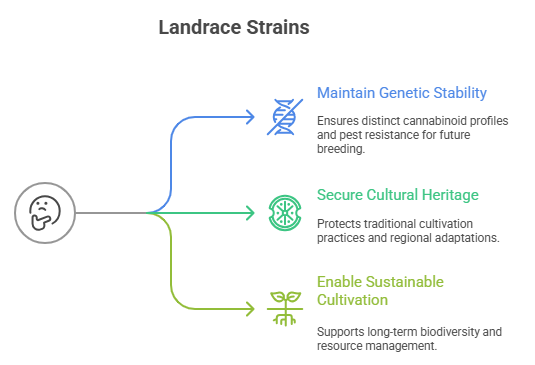
However, preserving this strain is important to maintain a useful genetic stability and cannabis biodiversity. They are significant genetic reservoirs for cannabis breeders, ensuring distinct cannabinoid profiles and pest resistance. However, protecting these strains is also to secure cultural heritage and enable sustainable cannabis cultivation for future generations of consumers and growers.
What Are Modern Hybrid Strains?
Modern hybrid strains refer to cannabis varieties, produced by crossbreeding different Indica and Sativa plants to produce several unique effects, like flavours, effects, and growth characteristics. Based on proper genetic selection, marijuana breeders combine the best traits of parent strains, which help to develop hybrids offering balanced experiences from calming and relaxing to uplifting and energetic.
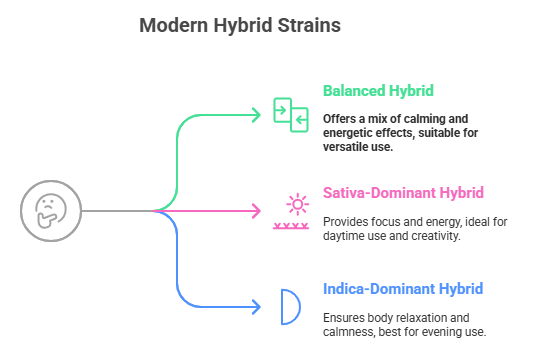
The primary aim of hybridisation includes improving flavours, potency, pest resistance, and quality. Some popular hybrid strains are Gelato, Blue Dream, and Girl Scout Cookies, which offer distinct effects and aromas. The hybrid strains can be balanced, sativa-dominant, or indica-dominant, determining genetic composition and quality.
The blending of different strains allows users to experience relaxed surroundings and creativity. However, while sativa-dominant strains ensure focus and indica-dominant strains are beneficial for soothing body relaxation, the hybrid strains are effective for medical and recreational cannabis consumers for their consistent performance and adaptability.
| Type | Strain Name | Origin Region | Typical Effects |
|---|---|---|---|
| Landrace | Afghan Kush | Afghanistan | Relaxing, sedative |
| Landrace | Durban Poison | South Africa | Energetic, uplifting |
| Hybrid | Blue Dream | USA (California) | Balanced, euphoric |
| Hybrid | Girl Scout Cookies | USA (California) | Euphoric, creative |
Table 1: Popular Examples of Landrace and Hybrid Strains
Key Differences Between Landrace and Modern Hybrids
Here are some of the key differences between modern hybrid cannabis strains and landrace strains.
Genetic Purity vs. Genetic Mix
The genetic purity of landrace strains, such as Burmese landrace strains and Afghani landrace strains, is the key reason behind their popularity and acceptance by both consumers and weed breeders. However, landraces are genetically non-uniform (Heterogeneous) and are a key source of genetic diversity for the overall crop improvement. Usually, they are less diverse but more distinct than the production of the modern era of cannabis breeding.
On the other hand, modern hybrids are the outcome of deliberate scientific crossbreeding of landrace and other hybrid strains. Breeders mix several genetics to combine multiple desirable traits, such as disease resistance, higher potency, or various flavours. It further ensures a wide range of growth traits and effects, but they are less stable (genetically) than landrace strains.
Effects and Potency
Landrace strains have more predictable and balanced effects, considering their pure Indica or Sativa lineage. For example, sativa-based landraces, such as Brazilian landrace strains and Colombian Gold, are well-known for cerebral highs, while indica-based ones, such as Jamaican landrace strains and Afghani landrace strains, provide body-centric relaxing effects, with a moderate THC and CBD level.
In contrast, modern hybrids are produced to customise effects and maximise potency. Breeders combine the relaxing effects of Indica with the stimulating quality of sativas, resulting in energised and relaxing strains, which balance both sensations. Hybrids like GSC and Blue Dream are well-recognised for their higher THC levels.
Cultivation Difficulty and Yield
The production of landrace strains, like Burmese landrace strains, African landrace strains, and Afghani landrace strains, is challenging, especially outside their native habitats, since they are well-suited to a specific climate and environment. Cultivating these strains in different geographical zones forces the plants to adapt the unfamiliar conditions like different soil types, humidity, and daylight cycles. Apart from this, they mostly have longer flowering periods and are less pest or disease-resistant.
However, modern hybrids are well-designed to simplify cultivation, and based on selective breeding, hybrids experience faster growth rates, greater resistance to environmental challenges like pests, and shorter flowering cycles. They also show higher yields, which make these strains profitable for breeders, and the predictability and increased control of hybrids contribute to their prevalence in the international cannabis market.
| Feature | Landrace Strains | Modern Hybrid Strains |
|---|---|---|
| Genetic Purity | Pure, stable genetics | Crossbred, mixed genetics |
| Origin | Native to specific regions | Created via controlled breeding |
| Growth Characteristics | Adapted to the native environment | Engineered for various conditions |
| Potency | Moderate to high | Often very high |
| Yield | Moderate, variable | Higher and more consistent |
| Flavour/Terpenes | Unique, region-specific | Wide range, enhanced flavours |
| Cultivation Difficulty | Can be challenging | Easier, optimised for growers |
Table 2: Landrace vs Hybrid Strains Comparison Overview
Benefits and Drawbacks of Landrace Strains
Here are some of the key benefits and drawbacks of landrace strains.
Benefits of Landrace Strains
- Since these occur in specific climates for thousands of years, they are genetically stable with more natural resilience against local plant diseases and pests.
- They hold cultural importance and provide research-based insights into the evolutionary history, with unique characteristics like distinct aromas and flavours.
Drawbacks of Landrace Strains
- Some of the landrace varieties, especially the sativa ones, take longer flowering times, which sometimes go up to 170 days.
- Less efficient and productive for commercial cultivation, compared to modern cannabis hybrids.
- Although genetically pure in nature, the potency and effects vary significantly between individuals within the same strains.
Benefits and Drawbacks of Modern Hybrid Strains
Here are some of the key drawbacks and benefits of modern hybrid strains.
Benefits of Modern Hybrid Strains
- Breeders may adjust the ratio of indica and sativa genetics to develop strains with specific effects, such as balancing relaxation with mental clarity.
- The modern hybrid strains provide enhanced therapeutic benefits, such as anxiety and stress relief, pain management, and improved sleep, with increased potency (high THC for stronger effects) and unique aromas and flavours.
Drawbacks of Modern Hybrid Strains
- Since commercialisation is a key purpose of modern hybrid strains, in several cases, the plants are more susceptible to disease compared to the resilient landrace strain, which affects the quality.
- High-THC hybrids may exacerbate existing conditions like cardiovascular issues or anxiety, including deficits in memory, learning, and motivation.
| User Goal | Recommended Strain Type | Reason |
|---|---|---|
| Stable genetics & heritage | Landrace | Pure genetics, cultural value |
| High potency & yield | Modern Hybrid | Engineered for strength & yield |
| Specific medical relief | Depends on strain profile | Choose based on cannabinoid ratios |
| Beginner grower | Modern Hybrid | Easier to cultivate |
Table 3: User Goals, Relevant Strain Types and Reasons
Summary
Understanding different cannabis strains enables growers and users to make well-informed choices regarding effect, potency, and cultivation methods. Pure, naturally occurring varieties that are indigenous to particular areas, such as South Africa and Afghanistan, are known as landrace strains, and they have stable genetics and cultural value. On the other hand, bred from various indica and sativa strains, modern hybrids combine desirable qualities like durability, flavour diversity, and increased potency.
Understanding both improves market comprehension, medicinal application, and sustainable production by enabling users to successfully match strains with their own objectives and growth environments.
Looking for landrace and modern hybrid strains? Visit our website to find the best options as per your requirements.