 REVIEWS.io - Rate us to Win Seeds
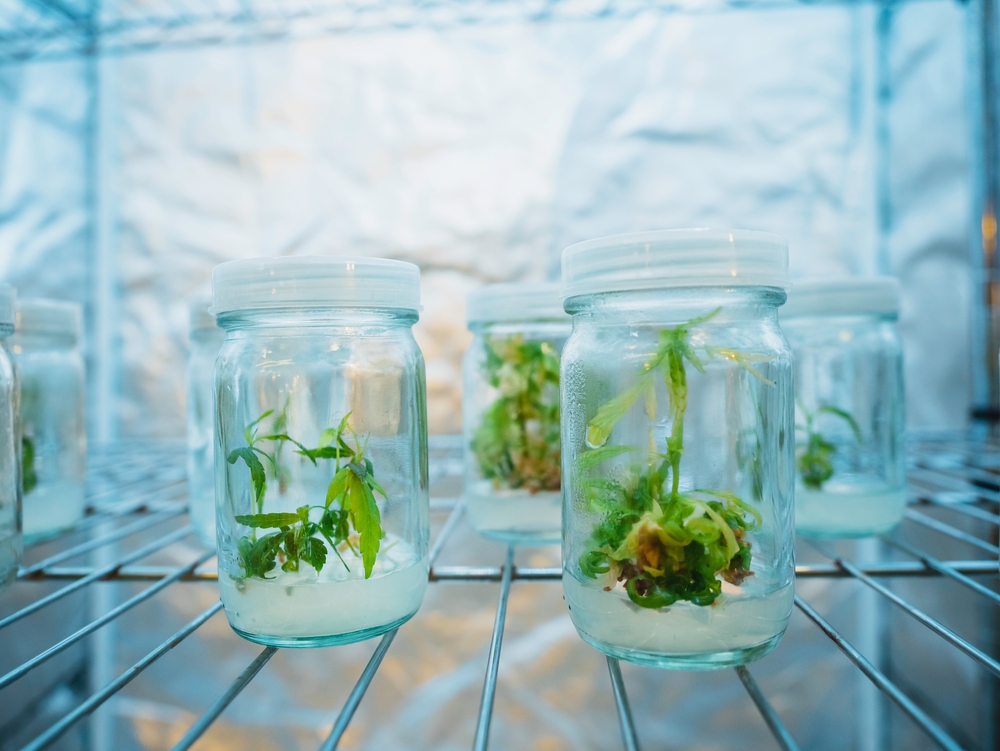
The key concept of cannabis tissue culture is based on aseptic, sterile conditions, where a small piece of plant tissue, harvested from a mother plant, is placed and cared for to regenerate. Here, we explore the emergence of cannabis tissue culture as an alternative method to cloning.
Tissue culture propagation, popularly known as micropropagation, is a sophisticated method designed to reproduce plants in specialised conditions by cultivating tissues or cells in a controlled environment. In cases of cannabis tissue culture, the nutrient-rich artificial medium is mostly DKW or Murashige-based, containing essential micro and macro-nutrients, sugars, vitamins, and specific plant growth regulators (PGRs), such as cytokinins and auxins. However, the fundamental principle of cannabis tissue culture is based upon the genetic potential to regenerate a whole and healthy plant. But how did it emerge as an alternative to traditional cloning? Let’s find out in this blog.
Tissue Culture vs Cloning
Well, fundamentally, cloning and tissue culture are similar, since in the end, growers find several plants genetically identical to the mother plant. But the debate does not end here.
The major difference between cloning and tissue culture is based on the setup and execution. While the traditional cloning method needs a rooting sponge, a sharp blade, and some basic knowledge, tissue culture demands laboratory-based equipment, specialised growing media, and a sterile environment.
Cannabis tissue culture protocol is a precise process, where growers need to ensure the sterilisation of plant materials, such as the stem, to prevent contamination. It is important to control environmental conditions, such as light, temperature, and humidity, since the cultivated tissue is susceptible to stressful conditions.
Cannabis Tissue Culture: How Is It Done?
Before understanding the process of cannabis tissue culture, you need to know about the kits that you can use to get the most effective results.
Check this table to know about cannabis tissue culture kits!
| Kits | Description |
|---|---|
| Specialised Media | Murashige & Skoog basal medium |
| Sterile Containers | Jars or culture vessels |
| Tools | Multiple instruments, such as scalpels or forceps; petri dishes and gloves (single-use or easy sterilisation). |
| Contamination Control | Plant Preservative Mixture (PPM) to maintain a sterile environment and prevent contamination. |
| Optional Equipment | Advance kits, like small autoclaves or portable flow hoods. |
Table 1: Cannabis Tissue Culture Kits
Now, check the following 5 steps that you need to know for cannabis tissue culture.
Stage I: Selection and Preparation of the Donor Plant
At the beginning, a healthy mother plant is selected, containing desirable plant traits, such as disease resistance and high cannabinoid content. The donor plant (explant: a small tissue as a nodal selection or a shoot tip).
Stage II: Initiation and Sterilisation
- The explant is surface-sterilised, using several types of chemical solutions, such as isopropyl alcohol or sodium hypochlorite washes to exclude contaminants like fungi, bacteria, or pests.
- The sterile tissue is placed in a culture vessel containing liquid medium or nutrient-rich agar, supplemented with specific plant hormones, such as auxins and cytokinins, to encourage growth.
Note: A Laminar flow hood is used to prevent contamination in this stage.
Stage III: Multiplication
- The culture is transferred to a fresh medium, exclusively designed for shoot proliferation and rapid cell division.
- High-concentration cytokinin is used to enhance the development of microshoots.
- Controlled environment with specific temperature, light, and humidity.
Stage IV: Rooting
- The multiplied shoots are moved to a different medium to enhance root development.
- This medium mostly contains a higher concentration of auxins that stimulate a reliable root system.
Stage V: Acclimatisation (Hardening-Off)
- This is the final stage, where rooted plantlets are transitioned from a sterile, high-humidity laboratory to ambient external conditions (e.g., greenhouse).
- This process exposes the new plantlets to natural light and lower humidity, which can survive in a non-sterile environment.
- Finally, they are ready to be transplanted into soil for natural growth and development.
Here’s a table for you to take a look at the general cannabis tissue culture media recipe components:
| Requirements | Amount |
|---|---|
| Distilled/Deionised Water | 700-800 mL |
| Basal Salt Mixture | 4.43 g of Murashige and Skoog (MS) |
| Carbon Source | 30 g of sucrose (table sugar) |
| Gelling Agent | 6-8 g of agar or gellan gum |
| pH Adjuster | pH to 5.7–5.8, use 1.0 M hydrochloric acid or potassium, or sodium alcohol |
Table 2: General Tissue Culture Media Recipe Components (per 1 Litre)
Advantages of Cannabis Tissue Culture
Cannabis tissue culture offers multiple advantages for breeders and cultivators, mostly by producing genetically similar and disease-free plants in a controlled environment.
Here are some of the key benefits of cannabis tissue culture.
1. Pest and Disease Elimination
This tissue culture process involves plant tissue sterilisation in a lab environment, which efficiently excludes several systemic pathogens like fungi, bacteria, and Hop latent viroid (HpLvd). These pathogens can plant tissues if cloned in a traditional method, while the cannabis tissue culture lab facilities produce more vigorous and healthier plants, reducing the need for chemical pesticides.
2. Uniformity and Genetic Preservation
Cannabis tissue culture secures the production of “true-to-type” or identical clones of the mother plant. Since it is critical to maintain consistent quality, such as specific cannabinoid profiles, such as THC/CBD content, in traditional settings and processes, cannabis tissue culture protocols can ensure desirable traits and meet the market demand.
3. Long-term Genetic Banking
With a rapid and scalable production in a short time, growers can store it in a “suspended animation” state for a longer period. It helps preserve the rare elite genetics, without any risk of loss of disease.
4. Enhanced Breading Programme
Cannabis tissue culture facilitates genetic improvement, developing new and improved strains. It provides a reliable method for producing large numbers of uniform plants.
Risks of Cannabis Tissue Culture
Here are the most common risks you might face regarding cannabis tissue culture.
1. High Initial Investment
Since the tissue culture needs a reliable and growth-friendly environment, you need to set up a sterile culture lab, which needs a high investment for precise environment control, autoclaves and others. If you do not have a consistent fund, the processes will frequently face challenges.
2. Labour-intensive
The process is not only labour-intensive, but they must have expertise regarding tissue culture processes and environment, while a high degree of knowledge and skill is required to ensure the desired outcomes. Lack of skills can easily cause contamination through fungi, bacteria, or yeasts, affecting the yield amount.
3. Difficulties in Acclimatisation
As the plants grow in a sterile environment, they are less resilient to the natural environment. So, the final stage of acclimatization to an outdoor setting is a sensitive process, posing risks of plant loss.
4. Somaclonal Variation
The tissue culture process may empower mutations (genetic changes), if not skilfully maintained in a suitable environment, which will eventually cause variations in traits, cannabinoid content or yield.
5. Media and Hormone Imbalance Issues
The use of misguided and inappropriate media combinations may cause physiological abnormalities such as leaf curling, stunted growth, leaf curling or hyperhydricity (a water-logged, glassy appearance), affecting plant health.
Final Thoughts
Although cloning and tissue culture produce the same results (plants), the differences are embedded in processes and mechanisms.
Check your kit box before you begin the process. Make sure that you have arranged all the necessary ingredients and lab equipment to get the most desirable results. Follow the 5-step method to get pest and disease-free, uniform plants with an enhanced breading program.
Lastly, a proper method of cannabis culture can produce long-term genetic banking, and if you are a full-time grower, follow the market demand.
Looking forward to conducting tissue culture at home? Not sure about the requirements or preparations you need? Visit our website and get your seeds, so that you can start growing the best plants in a controlled environment.
Frequently Asked Questions
What is the Future of Cannabis Tissue Culture?
Since the cannabis industry is booming, advanced propagation methods have also become an essential process. Cannabis tissue culture is now a valuable tool for the commercial production of cannabis. In the future, it is expected to be used more effectively, as per the market demand.
What Are the Challenges in Cannabis Tissue Culture Propagation?
Maintaining a sterile environment is difficult, while minor contamination may ruin an entire batch. However, if you want to improve yield, you have to invest in specialised lab materials and lab equipment. Apart from these, the cannabis tissue culture needs skilled technicians, and the processes need adequate care and time to produce disease-free cannabis plants.
Can Tissue Culture Be Incorporated for All Types of Cannabis Strains?
Yes, tissue culture can be implemented for most cannabis strains, including both industrial hemp genotypes and psychoactive drug types. It is a versatile propagation method, but before the process begins, check genotypes, protocol, and commercial viability.
Can I Do Cannabis Tissue Culture at Home?
Yes, you can conduct cannabis tissue culture at home with a careful DIY setup, adhering to strict sterile protocols. In the home, you can use common items, such as a pressure cooker and an air box, to maintain sterile conditions.