 REVIEWS.io - Rate us to Win Seeds
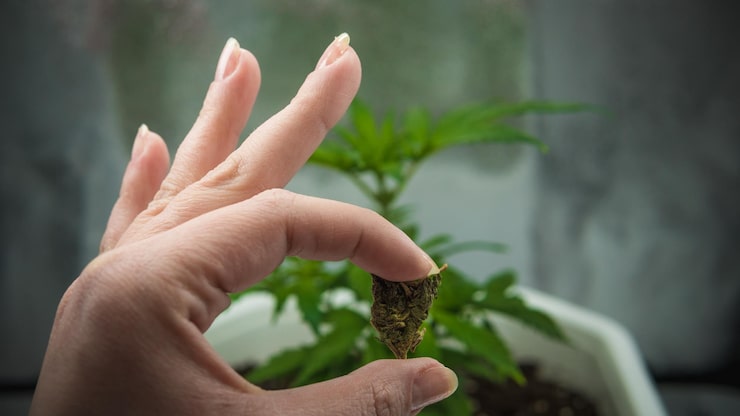
Growing marijuana at home is easy with the right setup, knowledge, and seeds. It can be a truly rewarding experience if you finally learn to cultivate and harvest on your own. But to be a success, you must know about the strains, seed types, growth space requirements, nutrition and watering, temperature and humidity, plant training, and more.
This blog will cover everything you need to know about harvesting marijuana at home as a beginner.
Understanding Legal Considerations First
You should check your local and national laws on marijuana cultivation before thinking about how to grow marijuana at home. For example, it is illegal to grow marijuana in the United Kingdom (UK), but not if you have a special Home Office licence.
Growing marijuana for medical use is also not legal, even if you have a prescription. There are some marijuana farms in the UK that operate under a strict license. These farms are permitted to grow for medical manufacturing, research, and low-THC hemp.
Choosing the Right Marijuana Seeds
Growing marijuana successfully at home starts with choosing the right seeds.
Types of Seeds
Take a look at the three seed categories:
| Seed Category | Features/ Traits | Female Plant Probability | Who is It for? | Example Strains |
|---|---|---|---|---|
| Regular Seeds | Equal chances of germinating into a plan of either gender. | 50% | Breeders and new strain creators | Amnesia Haze Regular, White Widow Regular, and Critical Regular. |
| Feminised Seeds | Seeds have maximum chances of germinating into female plants. | 99.9% | Growers and bud seekers | Sweet ZZ, Sweet ZZ, and Fruit Spirit. |
| Auto-flowering Seeds | Germinated plants can move into the flowering stage without needing changes in light cycle. | Regular (50%); Feminised (99.9%) | Guerrilla and beginner growers | Green Gelato, Royal Cheese Auto, and Sweet ZZ Auto. |
Table 1: Comparison of Marijuana Seed Categories
Choice for Beginner Growers
As a beginner grower, you will benefit from seeds that germinate into high-yielding, low-maintenance marijuana strains. A few great choices can be Blue Dream, Northern Lights, and White Widow. These are some pest-resistant and extremely resilient strains with fast flowering times.
Getting Seeds Safely and Legally
In the UK, you can get marijuana seeds safely and legally. You can purchase seeds from online seed banks and breeders. The process is simple and fast, and the seeds will be shipped to you quickly.
Setting Up Your Grow Space
Let’s talk about the setup for your growing space.
Indoor Vs. Outdoor Growing
You can regulate the environment if you grow indoors. You will also be able to perform gardening all year round. Growing indoors also offers your plants protection from exposure to diseases and pests.
Growing marijuana outdoors also has its advantages. You can take advantage of the natural light for your plants, which will let you save costs on artificial lights. You can also achieve more diversity of plants by growing outdoors.
Grow a Tent, Balcony, or Backyard
Backyards tend to receive sufficient sunlight and are large enough for growing in quantity. You can also use your balcony as a growing space if it receives adequate sunlight. Artificial lights are needed if you are choosing to grow in tents. Go for auto-flowering seeds if you are going to grow in low-light conditions.
| Growth Stage | Lights-On Temperature (°F) | Lower Temperature During Lights-Off By (°F) | Humidity (%) |
|---|---|---|---|
| Seedling | 68 to 77 | 8 to 9 | 65 to 70 |
| Vegetative | 71 to 82 | 8 to 9 | 40 to 70 |
| Flowering | 68 to 79 | 8 to 9 | 40 to 50 |
| Late Flowering | 64 to 75 | 9 to 18 | 30 to 40 |
Table 2: Temperature and Humidity Requirements for Growing Marijuana
Understanding Soil, Nutrients, and Water
Let’s understand the requirements for soil type, fertiliser, and watering.
Soil
Growing marijuana is often done in loamy soil, which contains balanced proportions of sand, sediment, and gault. It has great aeration and drainage. It also has a high nutrient-holding capacity and can support the healthy development of roots.
Seedlings benefit from more aerated soil, while a nutrient-rich medium is better during the flowering stage. You can also successfully grow marijuana in hydroponic systems.
Nutrient
Nitrogen (N), Phosphorus (P), and Potassium (K) are needed in larger amounts. Zinc (Zn), Iron (Fe), and Manganese (Mn) are required in smaller quantities. Here are the ratios you should follow.
| Growth Stage | N-P-K Ratio | Priority | Growth Target |
|---|---|---|---|
| Vegetative | 3-1-2/ 4-1-2 | Nitrogen | Leaf and Stem |
| Flowering | 1-4-3/ 1-5-4 | Phosphorous | Bud and Flower |
| Mature-Flowering | 0-0-10/ 0-0-20 | Potassium | Bud Potency |
Table 3: Nutrition Requirements for Growing Marijuana
Water
Ideally, the plants need to be watered every 2 to 4 days. But if you notice that your soil is drying out slower or faster, get the humidity levels checked. Also, check aeration and drainage if the soil remains damp even after 5 to 6 days.
Do not go above a few hundred millilitres during the first watering of your seedlings. Roots won’t go deep if excessive water is available. If you are growing marijuana outdoors, you can also set up an irrigation system for consistent watering.
Managing Light and Growth Cycles
Understand the importance of light schedules. You will get smaller pans with less yield if you follow a 12/12 on-off light cycle. Plants will grow larger with a higher yield on an 18/6 light cycle.
You can get fluorescent lights. They are easy to use and cost-effective. But fluorescent lights are not as efficient as High-Intensity Discharge (HID) lights. So, the development of buds on your marijuana plant will be limited by the lower light output.
The vegetative stage benefits largely from the HID lights like Metal Halide (MH) bulbs. And High-Pressure Sodium (HPS) bulbs support the flowering stage better. Light-Emitting Diode (LED) lights are good for indoor growth through the entire lifecycle.
Pruning, Training, and Pest Management
You should practise Low-Stress Training (LST) and topping to boost yield. LST is about gently bending branches and tying them down to improve light penetration. During the procedure of topping, the long tip of the primary stem is removed so as to drive the formation of multiple colas.
Common pests like spider mites and mould can affect the plant’s growth and yield. Maintain appropriate humidity levels and introduce beneficial predatory insects. This will help you control spider mites. Maintain good air flow and ventilation to prevent mould. Use neem oil, insecticidal soaps, and sulphur burning to organically treat the issues.
Harvesting and Curing Your Marijuana
Pistils are found on the cola buds. They will change colour from white to reddish orange. The trichome heads will also change colour. They will go from transparent to milky and then slowly to opaque, finally transcending to an amber stage. These are the indicators that your plants are ready for harvest.
Cut the branches that are 12 to 16 inches long. Start by separating the large fan leaves and then hanging the branches upside down from a string or wire. Try freeze-drying them. It is considered the fastest, simplest, and most space-efficient process of drying and curing.
Ready to Harvest at Home?
Growing marijuana at home is rewarding with the right approach. Step A is to choose the right seeds, and by Step Z, you have to begin the cutting and drying process. Remember to check the legality of home cultivation in your state.
Follow the temperature, humidity, and lighting cycle requirements for different growth stages. Also, don’t forget to provide the right soil, nutrients, and water. Set up a growth space with sufficient lighting and air circulation, and invest in artificial lights. So, if you have learned how to grow marijuana at home, order high-quality seeds online today!