 REVIEWS.io - Rate us to Win Seeds
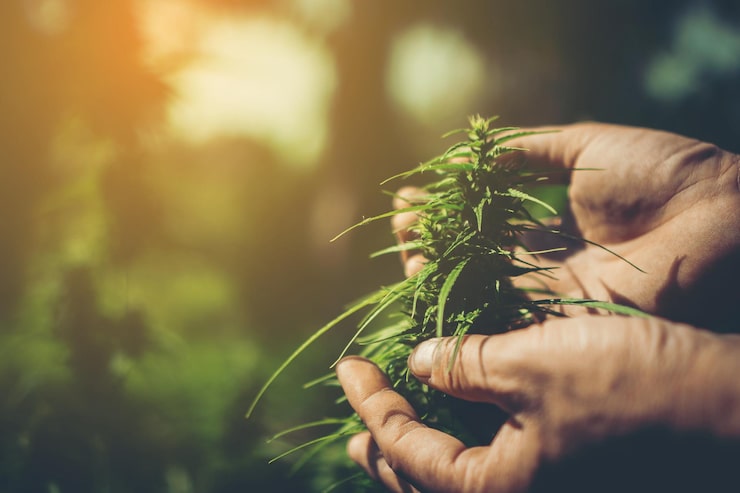
Growing your own cannabis is rewarding. It also offers significant cost savings and complete control over quality. This is also an opportunity to personalise your strains. This article is a beginner-friendly guide for your home growth, from germination to curing.
Understanding Cannabis Basics
Cannabis plants can be broadly categorised into Sativa, Indica, and hybrids.
Indica strains produce relaxing effects. It feels like “body high”. They have a shorter growth structure with broader leaves. Sativa strains tend to produce an uplifting and energetic “head high.” They grow taller and feature thinner leaves. Hybrids have the genetics of both, thus creating a mix of effects.
Only female plants produce flowers or buds. You’ll also find two main types of strains based on their flowering cycle – photoperiod and autoflowering.
You have to maintain a specific light schedule to trigger flowering. But autoflowering variants begin to flower automatically after a certain period, regardless of the light cycle. So, the simplicity makes autoflowering plants a popular choice for beginners.
Step 1- Know the Legal Rules
Before you start home cultivation, it is important to understand its legality in your specific area. Cannabis laws vary significantly by state and country. So, you must research and follow the local regulations. This includes knowing the legal limits on the number of plants you can grow, which can differ for medical and recreational users.
In the UK, it is illegal to cultivate cannabis without a license from the Home Office. This applies to both personal and medical use. Moreover, know that some jurisdictions may require you to obtain a permit, while others do not allow it at all. And remember that the penalties can be severe.
Step 2- Choose Your Seeds or Clones
If you want to germinate cannabis seeds, you can find high-quality ones from reputable online seed banks and breeders. You can choose between three types of seeds, depending on your needs.
| Seed Type | Key Characteristics | Best For |
|---|---|---|
| Regular | Genetically modified to produce only female plants (almost 99.9% chance). | Home growers who want to produce buds without the hassle of gendering plants. |
| Feminised | Can produce male or female plants (Almost 50% chance of either). | Breeders and growers who wish to create clones or strains. |
| Autoflower | Flowers bloom automatically depending on age rather than a light schedule. | Growers looking for quick and easy growth in limited space. |
Table 1: Comparing Different Types of Seeds
Step 3- Set Up Your Grow Space
You must make the choice between indoor and outdoor space.
Outdoor growing comes with the benefits of free sunlight and space. But it will not give you environmental control and can also make your plants vulnerable to pests and weather. Indoor growing offers complete control over light, temperature, and humidity. However, you will have to make an initial investment in equipment, which will involve ongoing energy costs.
For an indoor setup, a grow tent is great. Your most critical equipment will be a good light. LEDs are energy-efficient and produce less heat than HID lights. You must also install a strong ventilation system with an exhaust fan and carbon filter. These will be needed to control indoor temperature, humidity, and odour. You can also use a humidifier or dehumidifier to further control humidity.
Step 4- Germination & Seedling Stage
You can germinate cannabis seeds by directly planting them in a small pot. Alternatively, you can also go for the paper towel approach. Here is how to grow cannabis at home from seeds.
Light: Your young seedlings will need 18 to 24 hours of gentle light. Position the light at a safe distance to prevent stretching or burning.
Watering: Overwatering is the most common mistake. So, water sparingly. Do it only when the top inch of soil is dry. Make sure you water gently by using a spray bottle. Avoid overwatering to prevent root rot. And don’t place lights so close that the delicate growth gets damaged.
Step 5- Vegetative Stage
The vegetative stage is the growth phase that lasts for 3 to 16 weeks. Your plants will develop their structure, leaves, and stems in this stage. Here are the requirements for healthy development.
Nutrient Requirements: You should increase the lights-on duration to 18 to 24 hours per day to get the maximum growth. Nitrogen (N) will be the most critical element, as it is needed to produce chlorophyll for stems and leaves. Phosphorus (P) and Potassium (K) will also be important, but in smaller amounts. Here is how to grow cannabis with proper nutrients in each growth stage.
| Growth Stages | Focus | Key Macronutrients | Role |
|---|---|---|---|
| Seedling | Minimal | None to Low N-P-K | Provide enough energy to start |
| Vegetative | Leaf and Stem | High N, Low P-K [3-1-1] | Aid the development of strong stems and green leaves |
| Flowering | Buds | Low N, High P-K [1-3-2] | Aids the formation of dense buds and resins. |
Table 2: Nutrition Needs for All Cannabis Growth Stages
Training Techniques: Topping and Low-Stress Training (LST) are two techniques you can follow to maximise your production. Topping is about cutting the main stem to create multiple colas. LST involves gently bending the branches to create an even canopy, which ensures that all parts of the plant are receiving optimal light.
Step 6- Flowering Stage
Maintain balance with 12 hours of light and 12 hours of darkness for photoperiod strains. This change will help you trigger bud production.
Female plants will show the development of glands. They look like white hair. These are the pistils that will later become the buds you want. Pollination by a male plant will ruin your harvest by forcing the female to produce seeds. So, you should identify all the male plants and remove the males.
You must also closely monitor bud and trichome development. Use a magnifying loupe to check the colour of the trichomes. They are ready to harvest once they turn from clear to milky-whitish, which indicates peak potency.
Step 7- Harvesting
Now, you must be thinking, how long does it take to grow cannabis? The time span may range from anywhere between 4 to 8 months, depending on the strain and the growing environment.
Your plant will be ready to harvest once a majority of its trichomes turn milky-white and the pistils go brown. Use clean scissors or snips to cut the branches or the entire plant. You can also follow the “wet trim” method. It involves trimming the sugar leaves immediately after harvest. A “dry trim” approach can also be followed. This will be the right technique if the buds have dried.
Step 8- Drying & Curing
Hang your trimmed branches in a dark room with good airflow after harvest. Temperatures of around 55°F to 65°F with 50% to 60% humidity will be good for 7 to 21 days. The stems should snap instead of bending. This is when you know that the buds are ready for curing.
Place the buds in airtight jars, and fill them about 75%. You also need to have the jars burped regularly. Just open it for a moment and let the moisture go. Proper curing can help you improve flavour and potency, as it helps break down chlorophyll and preserve the terpenes.
Troubleshooting Common Problems
Pests like spider mites can cause yellowish markings and webbing. Fungus gnats are also problematic, and they can be identified as small flies in the soil. You can fight these pests using insecticidal soap and neem oil. You can also use sticky traps. Moreover, moulds like powdery mildew or bud rot are also major threats. You can prevent them by maintaining good air circulation and low humidity. Also, always remove infected parts.
Nutrient deficiencies can also often appear as discoloured leaves. Yellowing lower leaves can be a sign of nitrogen deficiency. And yellowing between veins on older leaves indicates a lack of magnesium. The most common cause is an incorrect pH balance, which prevents your plant from absorbing nutrients. So, keep a tab on the water’s pH and make the necessary adjustments.
Ready For High-Quality Seeds?
Growing your cannabis at home can feel rewarding. But you need patience, knowledge, and a good setup. You also need to understand legal compliance, choose quality seeds, and have proper lighting and ventilation in your grow space. You must also carefully manage each growth stage, from germination and vegetative to flowering.
Provide the right nutrients, lighting, and environmental conditions. Also, follow the proper drying and curing process. Even beginners can produce high-quality buds from seeds. So, order and germinate cannabis seeds today!