 REVIEWS.io - Rate us to Win Seeds
The medical and recreational use of marijuana is increasingly gaining acceptance. And this has brought many issues into focus, including the potential for marijuana allergy. Just like other plants, cannabis also contains specific proteins. These proteins can trigger a significant immune response in sensitive individuals. As public exposure to cannabis increases through consumption, handling, or even second-hand smoke, recognising the genuine health concern of marijuana allergy has become important.
If you want to learn more about the common symptoms of cannabis allergy, its causes, and the steps to take if you face the issue, then keep reading.
Can You Really Be Allergic to Marijuana?
You can be allergic to cannabis, as cannabis allergy is a very real and recognised condition. It is similar to being allergic to pollen or foods. It happens when your immune system mistakenly identifies harmless cannabis proteins as a threat and creates IgE (Immunoglobulin E) antibodies to fight them off.
The internal conflict between your IgE antibodies and cannabis proteins causes the allergic symptoms, which are referred to as weed allergy reactions. Remember that exposure is not limited to smoking. Reactions can be triggered by direct skin touch, smoke or pollen inhalation, and even ingesting edibles. Moreover, workers in cultivation and processing tasks often develop sensitivity over time due to constant heavy exposure.
Common Symptoms of Cannabis Allergy
The symptoms of cannabis allergy can vary widely, from mild discomfort to alarming, severe reactions.
Mild Symptoms
Mild symptoms tend to feel like hay fever, with persistent sneezing, runny nose, or uncomfortable congestion after exposure. Eyes may also become severely itchy and watery. Direct contact with the plant can lead to contact dermatitis, which is indicated by skin rashes or hives on the arms.
Moderate Symptoms
Moderate to severe allergic reactions call for immediate action. You may experience a deep, rattling coughing or wheezing, which is a sign of respiratory distress. Swelling of the lips, eyes, or throat is another major sign. Moreover, if you get an allergy from consuming edibles, you may face severe gastrointestinal issues, including nausea.
Severe Symptoms
The most serious but rare effect of cannabis allergy is anaphylaxis. It is a fast and systemic allergic reaction that causes a dangerous drop in blood pressure along with airway constriction. So, cases of anaphylaxis must be treated as an immediate medical emergency. Recognising the negative reactions after cannabis exposure is key to identifying a marijuana allergy.
Causes and Triggers of Marijuana Allergy
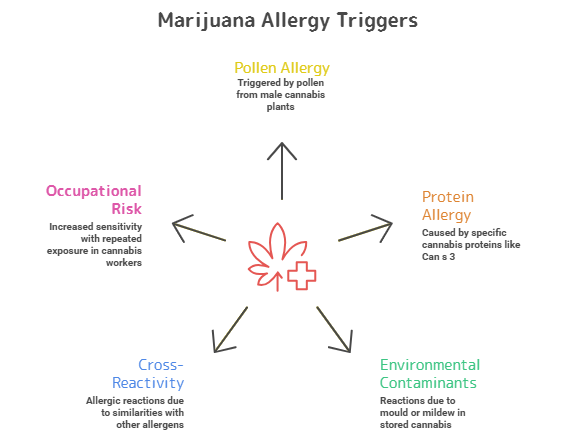
A marijuana allergy can be triggered by several factors. The most common source is pollen from male cannabis plants. It acts like a typical ragweed or grass pollen that causes the classic seasonal allergies. Another specific cause of allergic reactions is the structural cannabis proteins like “Can s 3,” which is targeted by the immune system.
Environmental contaminants can also trigger an allergic reaction. For instance, stored weed can easily harbour allergenic mould or mildew. Moreover, cross-reactivity also exists, which means people allergic to foods like tomatoes, peaches, or latex may also react to cannabis. As the sensitivity of cannabis can increase with repeated exposure, growers, trimmers, and dispensary staff face occupational risk.
How to Know If You’re Allergic to Weed
If you suspect an allergy to weed, start observing your symptoms carefully. Are the symptoms appearing consistently only after consuming, handling, or exposure to cannabis? If your answer is “yes,” then you must seek a medical diagnosis to confirm an allergy to cannabis.
Allergists will use reliable methods like skin prick or blood tests for measuring your IgE antibodies against cannabis proteins. However, as such testing is not universally standardised, you will find some clinics relying on detailed exposure history or an elimination-controlled exposure protocol.
Remember that you must never completely depend on self-diagnosis. It is possible that your symptoms are simply due to respiratory irritation from smoke.
What to Do If You Suspect a Cannabis Allergy
If you suspect a marijuana allergy, it is important that you act immediately. The first step should be to stop exposure immediately. So, avoid smoking, touching the plant, and being near dense smoke or pollen. Next, see a doctor or allergist for professional evaluation and a management plan.
In the case of mild symptoms, you will find relief with antihistamines approved by your doctor. And if you experience serious symptoms like breathing problems or anaphylaxis, you must immediately seek emergency help by calling 999 (UK).
If your work involves handling weeds, you can also take proactive steps like wearing gloves and high-filtration masks to avoid allergic reactions. You must also use air filters. You may consider non-contact forms like oils and edibles with extreme caution, in case you feel allergic when smoking. Remember that it is possible to manage weed allergy reactions with proper adjustments.
Can You Develop a Marijuana Allergy Over Time?
It is possible to develop a cannabis allergy over time. This is called sensitisation, where the immune system decides to fight an allergen after repeated encounters. Frequent and heavy users, or workers in cultivation and processing tasks, face a greater risk of such a delayed onset.
Intense exposure on a daily basis serves as a constant challenge. This eventually translates into a full-blown cannabis allergy. So, remember that tolerance to the psychoactive effects does not mean that you are immune to the allergic proteins of cannabis.
Living with a Cannabis Allergy
Living with a marijuana allergy requires communication with your physician, along with careful adjustments. You must inform your friends, family, and all healthcare providers about your condition. This will help you prevent accidental exposure. Also, stay vigilant. Read all product labels carefully, as trace cannabis proteins present in hemp or CBD derivatives can trigger allergic reactions.
You should also actively avoid environments with smoke or pollen. And if you have a severe allergy to cannabis, wearing a medical ID bracelet can potentially be a life-saver. Remember that your long-term well-being with a marijuana allergy depends completely on proactive awareness and responsible self-care.
When to Seek Emergency Medical Attention
Most weed allergy reactions are mild. However, seek immediate medical attention if you experience signs of potential anaphylaxis. The signs can include sudden and severe breathing difficulty, intense dizziness or disorientation, or rapid swelling of the throat or tongue.
A dangerous drop in blood pressure is another sign of a marijuana allergy that should be treated as an emergency. If you notice any of the signs of severe cannabis allergy, immediately call emergency services. Prompt medical treatment, like an epinephrine injection, is often critical and lifesaving.
Planning for a Medical Diagnosis?
As cannabis is becoming more normalised, recognising its potential downsides becomes essential. You need to remember that an allergy to weed is real, and so it must not be ignored. Quickly recognising the symptoms of allergy and seeking medical consultation are your best defences.
By adopting safer practices and being self-aware, people with a marijuana allergy can manage their condition effectively and thus live safely. So, stay informed and vigilant, and prioritise your health.